Going discovery-first on Indus Appstore

Designing an app store that felt native, intuitive, and tailored.

August 3, 2025
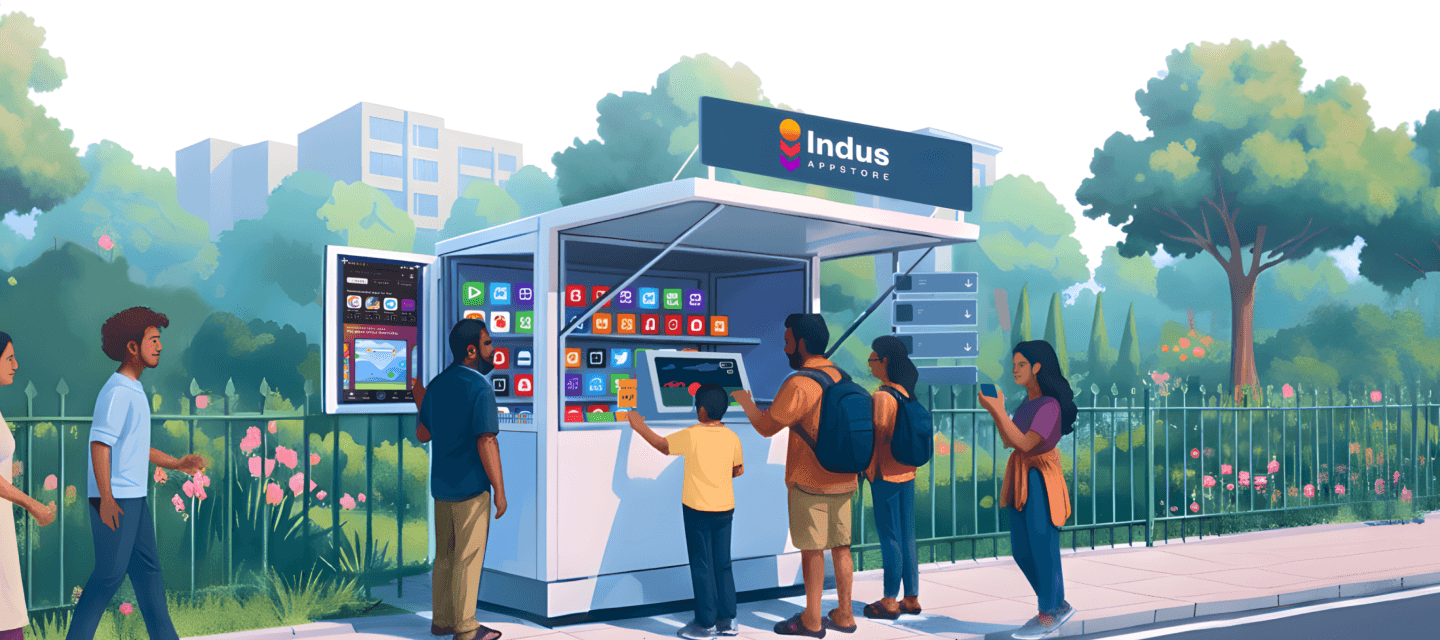
App stores have become digital marketplaces housing millions of applications, but they face a fundamental challenge: helping users discover relevant apps while keeping them engaged long enough to make downloads.

To give you some context, there are over 83 lakh smartphone apps in the world today. We recognised that there's tremendous untapped potential for people to discover more serendipitously, and beyond the top 100 apps. We wanted consumers to easily find apps that could genuinely improve their lives, while helping innovative developers find their audience organically. 

At Indus Appstore, we decided to explore new ways to bridge that gap.

Reframing the challenge

We started with a different question: How do we become a destination for app discovery? This shift from distribution-first to discovery-first thinking unlocks benefits across the entire ecosystem:

For users: More time exploring means discovering apps that genuinely solve problems they might not have articulated before. The experience becomes seamless and culturally and personally relevant.

For developers: They get access to a larger footprint of consumers through multiple discovery pathways, providing many opportunities for quality apps to connect with interested users.

For the business: Better long-term matches between users and apps lead to improved retention. On top of having a diverse ecosystem of apps, we also make that diversity accessible.

Answering this question is a continuous process. That said, here are some design-forward decisions we made to get the ball rolling.

Making the app rich visual-first
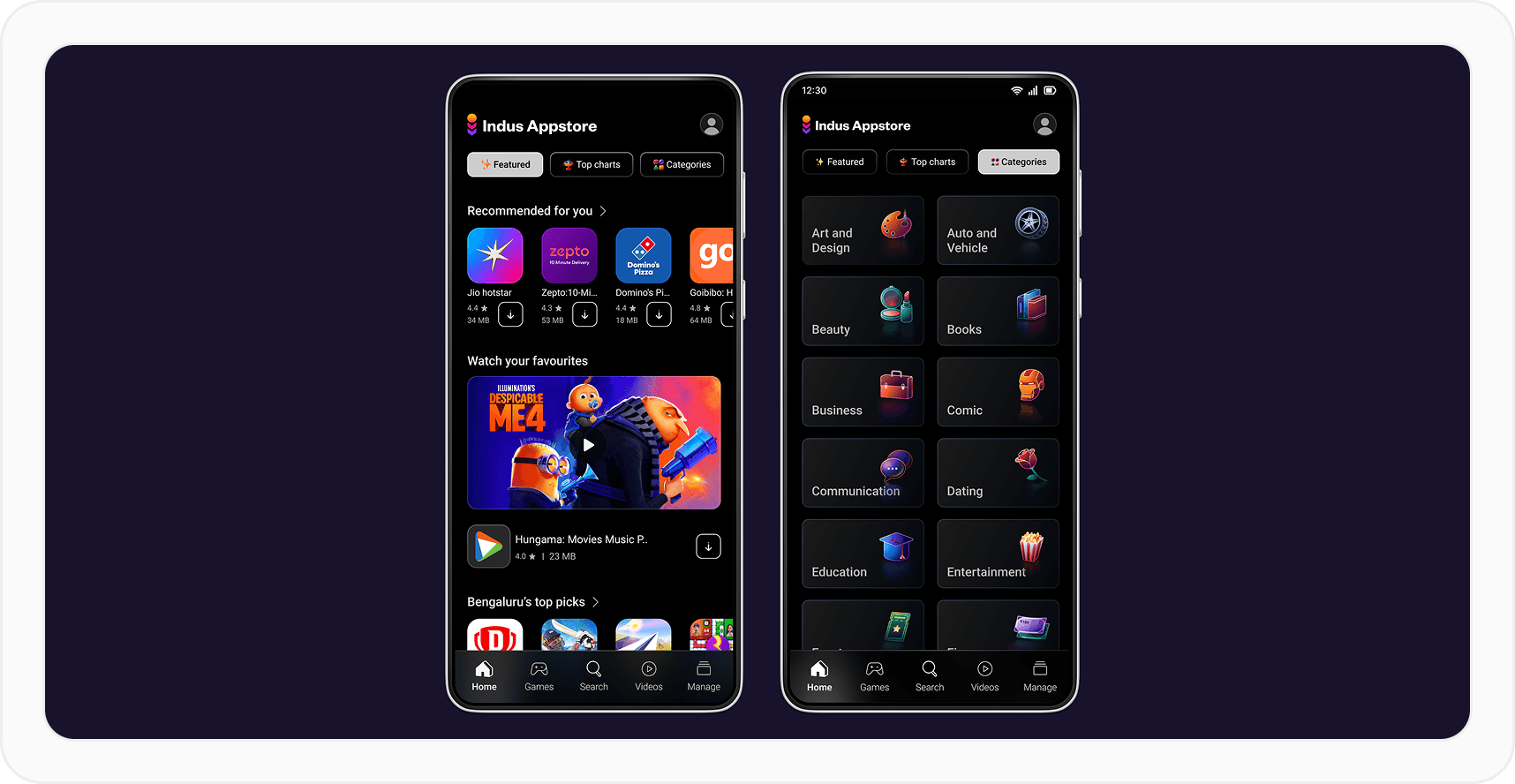
Apps are traditionally presented through screenshots, static text, and occasionally product videos. Once users have downloaded their essential apps, most return to the app store only when they have a specific product in mind. Traditional homepage designs fuel this behaviour, treating the store as a pure navigation hub.

However, we wanted to showcase value: what each app could do, and how it would fit into a user's life.

We quickly realised that video content, especially on the homepage, immediately showcases value without requiring clicks or searches. It enables impulse discovery—users might not know they need a particular app until they see it in action. Videos let them understand the value proposition without downloading anything first, creating a powerful conversion funnel.

By introducing rich media, we shifted to a showcase-first approach. The difference is profound: instead of hunting for apps, users serendipitously discover ways to enrich their lives.

Making dark mode the default

Dark mode is a win for both accessibility and immersion. It reduces eye strain and improves contrast, but more importantly, it makes content feel cinematic and engaging. Designers call this the "theatre effect"—the dark background prioritises visuals and colorful imagery the same way a dark theatre enhances the movie experience without detracting from it.

Well-designed dark mode, with proper contrast, genuinely enhances user engagement. For these reasons, we made the decision to default Indus Appstore to dark mode, creating an experience that feels premium and immersive from the first interaction.

Enabling multi-lingual discovery and voice search

India's linguistic landscape tells a compelling story: even by conservative estimates from most recent census data, the overwhelming majority of Indians prefer communicating in their mother tongues rather than English. This fundamental characteristic of our diverse population hasn't changed. However, the general app discovery experience has been designed primarily in English for English speakers, creating a significant underserved gap that we wanted to address.

We made the Indus Appstore available in 12 Indian languages. But we went beyond translation, into curating a completely language-first experience. For example, someone searching in Tamil or Kannada would find apps deeply relevant to their linguistic and cultural context, not just translated versions of globally popular apps.

We also introduced voice-enabled search, recognising that in a country where linguistic diversity and mobile-first usage dominate, voice search breaks down accessibility barriers. 

To be a truly Indian app store, we needed to mirror the way our users actually browse and discover content. Voice-enabled search was essential for creating an inclusive discovery experience.

In conclusion

When designing for Indus Appstore, we think deeply about context, culture, and user behaviour. By prioritising how people naturally explore and find apps, rather than just distributing what's already popular, we’re aiming to create an experience that is designed around curiosity. It serves both users seeking apps to enrich their lives and developers creating creative solutions worth trying out. 

After all, building for specific contexts and behaviours isn't just better business, it's better design!
Thanks to Elson Dsouza, Product Design Manager at Indus Appstore, for the inputs that shaped this article.

App stores have become digital marketplaces housing millions of applications, but they face a fundamental challenge: helping users discover relevant apps while keeping them engaged long enough to make downloads.

To give you some context, there are over 83 lakh smartphone apps in the world today. We recognised that there's tremendous untapped potential for people to discover more serendipitously, and beyond the top 100 apps. We wanted consumers to easily find apps that could genuinely improve their lives, while helping innovative developers find their audience organically. 

At Indus Appstore, we decided to explore new ways to bridge that gap.

Reframing the challenge

We started with a different question: How do we become a destination for app discovery? This shift from distribution-first to discovery-first thinking unlocks benefits across the entire ecosystem:

For users: More time exploring means discovering apps that genuinely solve problems they might not have articulated before. The experience becomes seamless and culturally and personally relevant.

For developers: They get access to a larger footprint of consumers through multiple discovery pathways, providing many opportunities for quality apps to connect with interested users.

For the business: Better long-term matches between users and apps lead to improved retention. On top of having a diverse ecosystem of apps, we also make that diversity accessible.

Answering this question is a continuous process. That said, here are some design-forward decisions we made to get the ball rolling.

Making the app rich visual-first

Apps are traditionally presented through screenshots, static text, and occasionally product videos. Once users have downloaded their essential apps, most return to the app store only when they have a specific product in mind. Traditional homepage designs fuel this behaviour, treating the store as a pure navigation hub.

However, we wanted to showcase value: what each app could do, and how it would fit into a user's life.

We quickly realised that video content, especially on the homepage, immediately showcases value without requiring clicks or searches. It enables impulse discovery—users might not know they need a particular app until they see it in action. Videos let them understand the value proposition without downloading anything first, creating a powerful conversion funnel.

By introducing rich media, we shifted to a showcase-first approach. The difference is profound: instead of hunting for apps, users serendipitously discover ways to enrich their lives.

Making dark mode the default

Dark mode is a win for both accessibility and immersion. It reduces eye strain and improves contrast, but more importantly, it makes content feel cinematic and engaging. Designers call this the "theatre effect"—the dark background prioritises visuals and colorful imagery the same way a dark theatre enhances the movie experience without detracting from it.

Well-designed dark mode, with proper contrast, genuinely enhances user engagement. For these reasons, we made the decision to default Indus Appstore to dark mode, creating an experience that feels premium and immersive from the first interaction.

Enabling multi-lingual discovery and voice search

India's linguistic landscape tells a compelling story: even by conservative estimates from most recent census data, the overwhelming majority of Indians prefer communicating in their mother tongues rather than English. This fundamental characteristic of our diverse population hasn't changed. However, the general app discovery experience has been designed primarily in English for English speakers, creating a significant underserved gap that we wanted to address.

We made the Indus Appstore available in 12 Indian languages. But we went beyond translation, into curating a completely language-first experience. For example, someone searching in Tamil or Kannada would find apps deeply relevant to their linguistic and cultural context, not just translated versions of globally popular apps.

We also introduced voice-enabled search, recognising that in a country where linguistic diversity and mobile-first usage dominate, voice search breaks down accessibility barriers. 

To be a truly Indian app store, we needed to mirror the way our users actually browse and discover content. Voice-enabled search was essential for creating an inclusive discovery experience.

In conclusion

When designing for Indus Appstore, we think deeply about context, culture, and user behaviour. By prioritising how people naturally explore and find apps, rather than just distributing what's already popular, we’re aiming to create an experience that is designed around curiosity. It serves both users seeking apps to enrich their lives and developers creating creative solutions worth trying out. 

After all, building for specific contexts and behaviours isn't just better business, it's better design!
Thanks to Elson Dsouza, Product Design Manager at Indus Appstore, for the inputs that shaped this article.

If this excites you,
let's build together

Sign up to get updates about new essays and design events

If this excites you,
let's build together

Sign up to get updates about new essays and design events

If this excites you,
let's build together

Sign up to get updates about new essays and design events